
Harnessing AI to Improve Ovarian Cancer Outcomes
February 19, 2026
Found in Gynecologic Cancer, News, Ovarian Cancer
An international collaboration involving B.C. researchers has been awarded $2 million to use AI to identify factors tied to long-term survival.
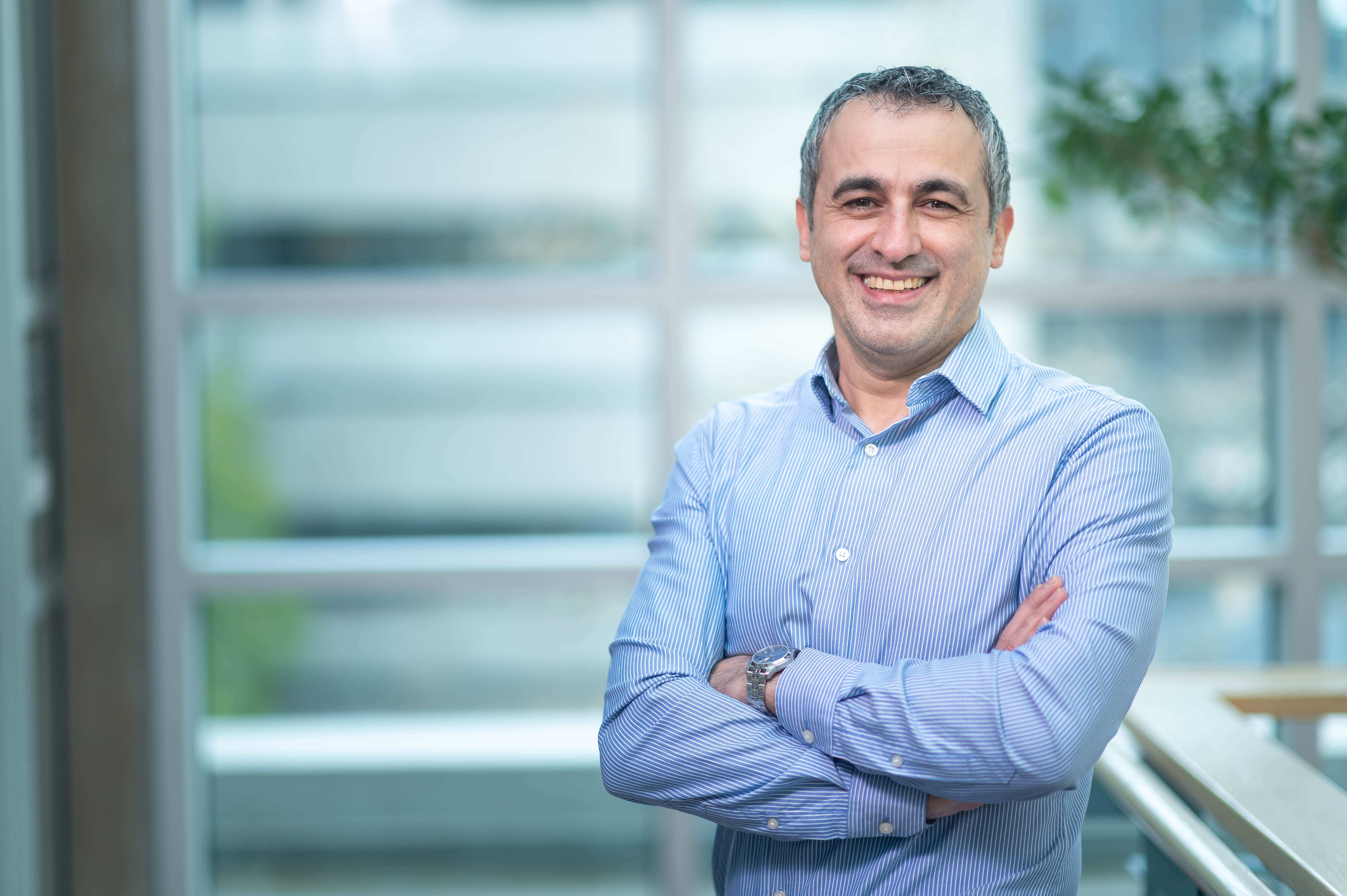
B.C. researchers are part of an international team awarded $2 million to study how artificial intelligence (AI) can improve prediction of ovarian cancer survival, guide treatment selection and ultimately lead to better patient outcomes.
New treatments for high-grade serous ovarian cancer, the most common form of ovarian cancer, have been introduced over the last decade, but still 70% of patients will relapse and five-year survival rates are low.
With this grant, researchers will use state-of-the-art AI to help predict survival and guide treatment selection and clinical trial recommendations.
The award includes a $1 million AI Accelerator Grant from the Global Ovarian Cancer Research Consortium, founded by Ovarian Cancer Canada, the Ovarian Cancer Research Alliance (United States), Ovarian Cancer Action (United Kingdom) and Ovarian Cancer Research Foundation (Australia), as well as another $1 million in compute power from Microsoft’s AI for Good Lab.
The researchers represent the Multidisciplinary Ovarian Cancer Outcomes Group, or MOCOG, which was founded in 2012 with a goal to identify the factors associated with long-term survival in high-grade serous ovarian cancer. The group includes investigators and patient advocates from Canada, Australia, the United Kingdom and the United States.
“Researchers in British Columbia have been leading the way on ovarian cancer care — including disease prevention, diagnosis and personalized treatment — for more than a decade,” said Dr. Ali Bashashati, the lead Canadian researcher and computational scientist with B.C.’s Gynecological Cancer Initiative (GCI). “I am proud to be part of expanding our province and nation’s leadership in artificial intelligence and ovarian cancer care on a global stage.”
The team will analyze one of the largest and most comprehensive international collections of ovarian cancer data assembled to date, integrating tumor images and molecular data, clinical records, immune features, genetic information and lifestyle factors from patients across international research groups.
Despite the robust data, conventional statistical models have had limited success identifying distinct markers of longer survival. The goal is to use AI to uncover more complex patterns and develop robust tools to predict treatment response that will directly guide treatment choices.
Dr. Bashashati, who is director of AI research for the GCI’s Ovarian Cancer Research Program (OVCARE) an associate professor in UBC’s School of Biomedical Engineering and Department of Pathology and Laboratory Medicine, will lead the project’s AI work with investigators from UBC, BC Cancer and the Vancouver Coastal Health Research Institute.
Other B.C. investigators include Dr. Gillian Hanley, associate professor of obstetrics and gynecology at UBC, and Dr. Brad Nelson, distinguished scientist at BC Cancer and professor of medical genetics at UBC. Dr. Nelson is also working to develop new, more effective treatments for ovarian cancer through his roles as scientific director of BC Cancer’s Immunotherapy Program and the Lynda and Murray Farmer Immunotherapy Research Chair.
In addition to Dr. Bashashati, the research team leaders include experts representing epidemiology, molecular oncology, and clinical medicine, including Dr. Celeste Leigh Pearce, University of Michigan, United States; Dr. Susan Ramus, University of New South Wales, Australia; and Dr. James Brenton, University of Cambridge, United Kingdom.
“This grant reflects exactly why we created the Global Ovarian Cancer Research Consortium — to bring together outstanding global partners to tackle the challenges that have stalled progress in ovarian cancer for far too long,” said Audra Moran, president and CEO of Ovarian Cancer Research Alliance. “Artificial intelligence has the potential to accelerate breakthroughs across the ovarian cancer continuum, from prediction to treatment selection.”
Microsoft is partnering on the grant through its AI for Good Lab, donating nearly $1 million in in-kind Azure compute credits to the project. This computing support will enable the research team to accelerate large-scale data analysis essential to the project’s goals.
“New discoveries are urgently needed to find lifesaving treatments for ovarian cancer,” said Juan Lavista Ferres, chief data scientist at Microsoft and director of Microsoft’s AI for Good Lab. “Equipping leading researchers around the globe with powerful AI tools and computing resources will help accelerate their critical work and drive progress toward breakthroughs that could save lives.”

Advancing Ovarian Cancer Research
From diagnosis to advances in treatment, donor-supported research at BC Cancer is improving outcomes for patients impacted by ovarian cancer.
Donate Now

