
Lymphoma
Support BC Cancer’s World-Leading Lymphoma Research
For more information, contact Vanessa Stevens, Associate Director. Please consider donating today.
Each year, more than 1,400 British Columbians are diagnosed with a form of lymphoma.
Lymphoma, also known as lymphoid cancer, starts in lymphocytes, a type of white blood cell that plays a key role in the immune system.
Lymphoma is common in children and young adults. However, it can affect anyone, regardless of age or background.
What You Need to Know About Lymphoma
There are two main categories of lymphoma: Hodgkin lymphoma (HL) and non-Hodgkin lymphoma (NHL). The key difference between them is the type of lymphocyte in which the cancer originates.
Although HL is less common than NHL, it is generally more responsive to treatments, with patients experiencing long-term remissions. Risk factors for HL include HIV infection or a family history of the disease, while risk factors for NHL include a weakened immune system, autoimmune disorders and certain infections.
Common symptoms of lymphoma include painless swelling of lymph nodes in the neck, groin or armpit; fatigue; shortness of breath; itchiness (often on the chest or abdomen); back or abdominal pain; and abdominal swelling. Symptoms at later stages, or during treatment, can include persistent or unexplained fever, night sweats and unexplained weight loss over a six-month period.
If you have any symptoms or concerns, speak with a health care provider.
How BC Cancer is Advancing Innovation in Lymphoma Research and Care
Donor support ensures BC Cancer can continue to accelerate cutting-edge discoveries in lymphoma research and care.
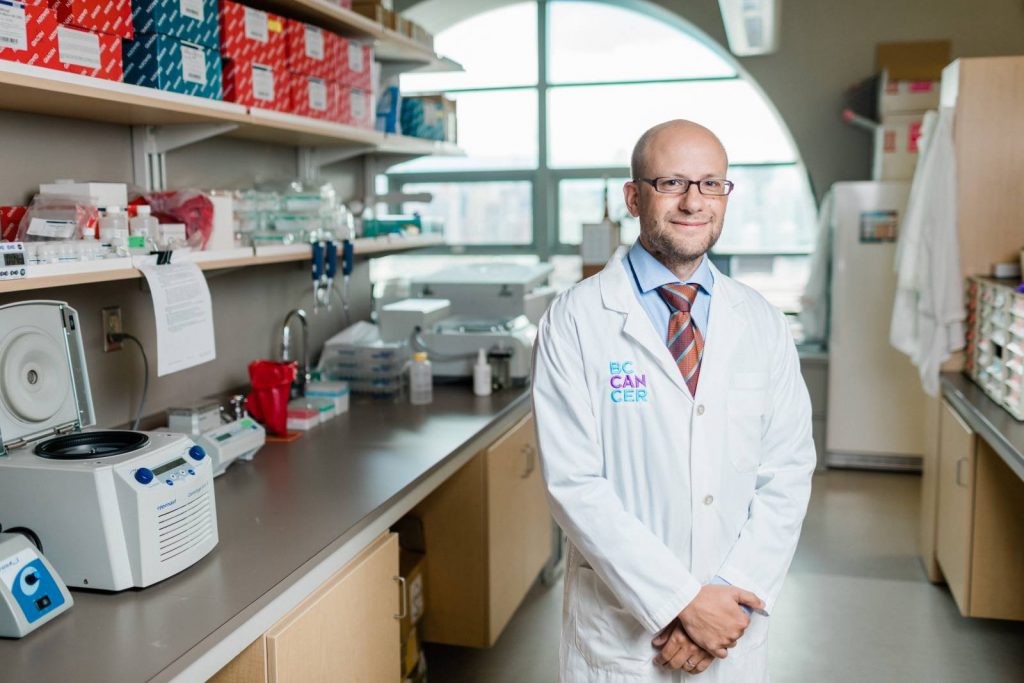
"It is critical to have you as donors and the BC Cancer Foundation as partners as we strive to solve the mystery of cancer. "
Dr. Christian Steidl, Co-Director of the Centre for Lymphoid Cancer
The Centre for Lymphoid Cancer (CLC)
Located at the BC Cancer Research Centre, the CLC is a multi-disciplinary research program dedicated to developing new treatments and diagnostics for lymphoid cancer. Spearheaded by Drs. David Scott and Christian Steidl, the world-leading team conducts lab and clinical studies that are revealing deeper insights into the origins and evolution of diverse lymphomas, enabling clinicians and scientists to pioneer more effective treatments.
In 2024, the CLC published 59 papers in international peer-reviewed journals, helping secure additional awards and grant funding to expand their work. In the same year, Dr. Steidl received the prestigious Karl Mushoff Prize for best preclinical abstract for his exceptional contributions to HL research.
Expanding Life-Saving Knowledge of Follicular Lymphoma (FL)
BC Cancer research is uncovering new findings about FL, which accounts for about 20% of all NHL. FL is typically slow-growing and responds well to treatment but can lead to a more aggressive cancer or relapse.
- A study by Drs. Christian Steidl and Andrew Roth is improving understanding of how FL may transform into fast-growing, aggressive B-cell lymphoma (DLBCL). This research could help clinicians optimize treatment strategies.
- A population-based study by Drs. Laurie Sehn, Kerry Savage and Andrea Lo showed that tumour size is linked to patient outcomes. The findings suggest that tumour diameter can be used as a marker to distinguish low-risk patients who may respond well to radiation therapy alone from higher-risk patients who may benefit from additional treatment.
First-in-Canada Spatial Imaging Technology
Thanks to donor generosity, the CLC acquired Canada’s first CosMX SMI (Spatial Molecular Imager) — a cutting-edge technology that allows researchers to map tumours at the molecular level. This powerful tool provides detailed insight into the tumour microenvironment, revealing how cancer cells are organized as well as how they interact and behave. The CosMX SMI can measure and map the location of up to 6,000 genes within individual cancer cells, opening the door to new knowledge of both common and rare lymphomas.
Since its installation, Drs. Scott and Steidl have completed several feasibility studies. Findings from this early work have resulted in new grants, accelerating research into both common and rare lymphomas.
Support BC Cancer’s World-Leading Lymphoma Research
For more information, contact Vanessa Stevens, Associate Director. Please consider donating today.