
Bladder Cancer
Support BC Cancer’s World-Leading Bladder Cancer Research
For more information, contact Brad Wilkinson, Senior Development Officer. Please consider donating today.
Bladder Cancer
Bladder cancer is the fifth most common cancer in B.C., where one in 65 women and one in 20 men will develop the disease in their lifetime. Each year, more than 1,700 new cases of bladder cancer are diagnosed in the province, with about 89% of diagnoses occurring in people over the age of 60.
Because bladder cancer is often linked to low treatment response and poor survival outcomes in advanced-stage patients, BC Cancer experts are working to better understand the characteristics of the disease and develop more effective treatments.
What You Need to Know about Bladder Cancer
Bladder cancer often starts in the lining of the bladder, part of the urinary tract that stores urine, and can spread to the bladder wall, lymph nodes or other organs.
While the exact cause of bladder cancer is not known, several factors can increase your risk. These include smoking, being over 40 years of age, being male and white, having a personal or family history of bladder cancer, frequent bladder infections or irritations, chemical exposure and having Lynch syndrome.
The most common symptom of bladder cancer is blood in the urine. Other signs and symptoms include frequent urination, pain or burning during urination and pain in the lower back, pelvis or flank.
How BC Cancer is Advancing Bladder Cancer Research and Treatment
Thanks to donor support, BC Cancer researchers are examining how bladder cancer looks and behaves in different people, enabling the launch of new clinical trials and the development of more targeted treatments.
The Genitourinary (GU) Biobank
Established in 2016, BC Cancer’s GU biobank is a vital resource that supports research collaboration by ethically collecting and storing tissue samples and clinical health information, with patient consent, for use in approved research. The biobank now houses samples from over 450 patients with advanced bladder cancer, making it one of the largest bladder cancer biobanks in the world.
B.C. Clinical Trials Fuelled by Global Collaboration
Under the leadership of Dr. Bernie Eigl, medical oncologist and director of BC Cancer’s provincial clinical trials office, cancer researchers in B.C. can now design and lead their own clinical trials.
As part of a Canadian-led international initiative, Dr. Eigl is collaborating with the Canadian Cancer Trials Group to analyze blood samples from across the globe. Together, they are developing a clinical trial for bladder cancer that will match highly personalized treatments with specific mutations found in advanced cancers. Working alongside Dr. Eigl, BC Cancer scientists Drs. Alexander Wyatt and Gillian Vandekerkhove are refining how blood samples are used to select the right treatment for each patient at the right time.
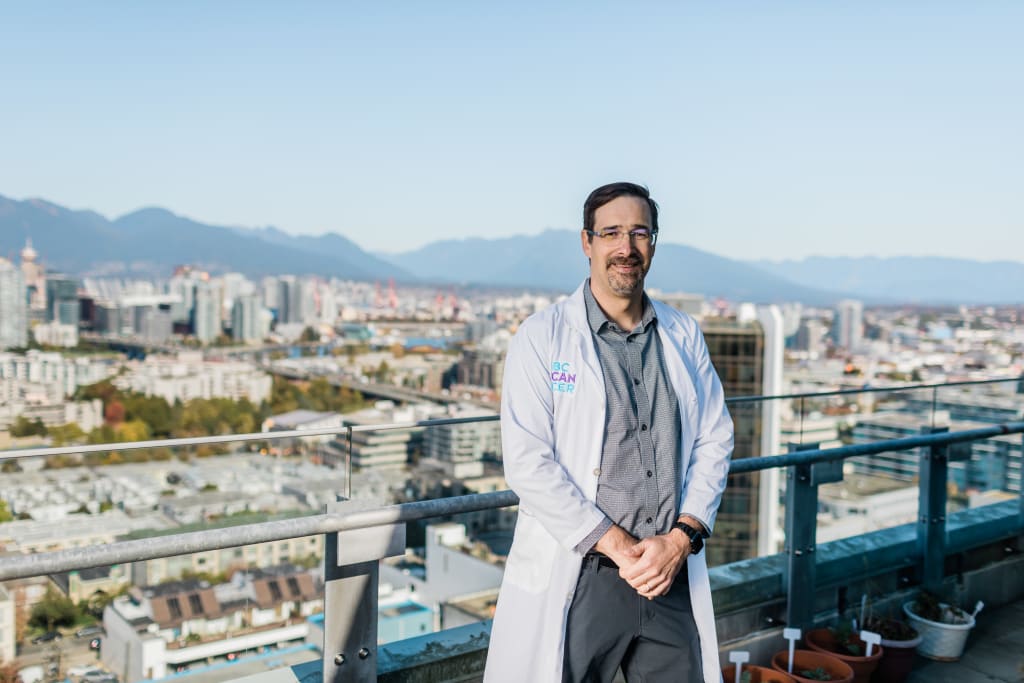
"The introduction of immunotherapy and other new treatments in the last decade has resulted in a doubling in survival and an increased cure rate for people with previously incurable disease."
Dr. Bernie Eigl, medical oncologist, BC Cancer
Personalized Treatment Using Circulating Tumour DNA (ctDNA)
BC Cancer is analyzing ctDNA — DNA fragments released into the bloodstream by cancer cells — from blood samples of bladder cancer patients to better understand drug resistance and guide personalized treatments. Testing for ctDNA is a minimally invasive, fast and reliable way to identify a patient’s unique mutation profiles and predict treatment response, enabling clinicians to develop more precise, targeted treatment plans.
The Biomarker Program
Building on advances in ctDNA testing, BC Cancer’s Biomarker Program focuses on studying different cancers to identify biomarkers, or “signatures,” that can help experts determine which cancers respond to which treatments.
The program includes three key projects:
- Investigating whether mutations or deletions found in ctDNA can predict metastatic bladder cancer patients’ response to first-line therapy and identify who will benefit from alternative treatments
- Researching whether changes in ctDNA levels with treatment can tell us who is benefitting from treatment so that we can avoid over-treating some patients and under-treating others
- Analyzing ctDNA to identify unique mutational signatures for each patient’s bladder cancer to understand how these signatures affect immunotherapy treatment response
Support BC Cancer’s World-Leading Bladder Cancer Research
For more information, contact Brad Wilkinson, Senior Development Officer. Please consider donating today.